环球时报整版解码宁波城市智慧治理实践与文化创造力
2026-05-27 08:06:01 司君伟 责编:国丹丹发布:司君伟 责编:国丹丹
今天
环球时报整版刊发英文报道
从两个方面
解码宁波城市智慧治理实践与文化创造力
海外网站和海外社交平台同步推出
全文如下
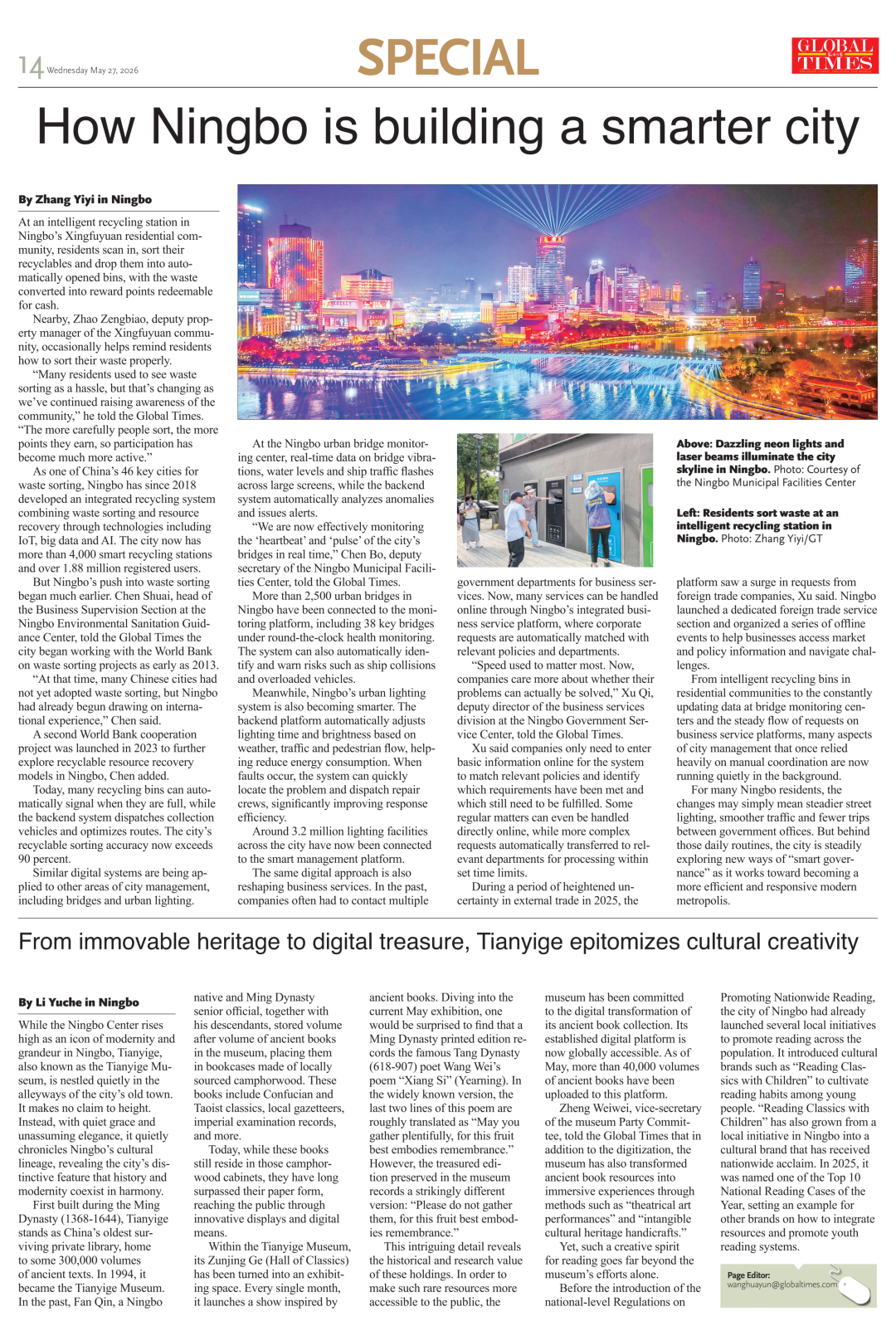
How Ningbo is building a smarter city
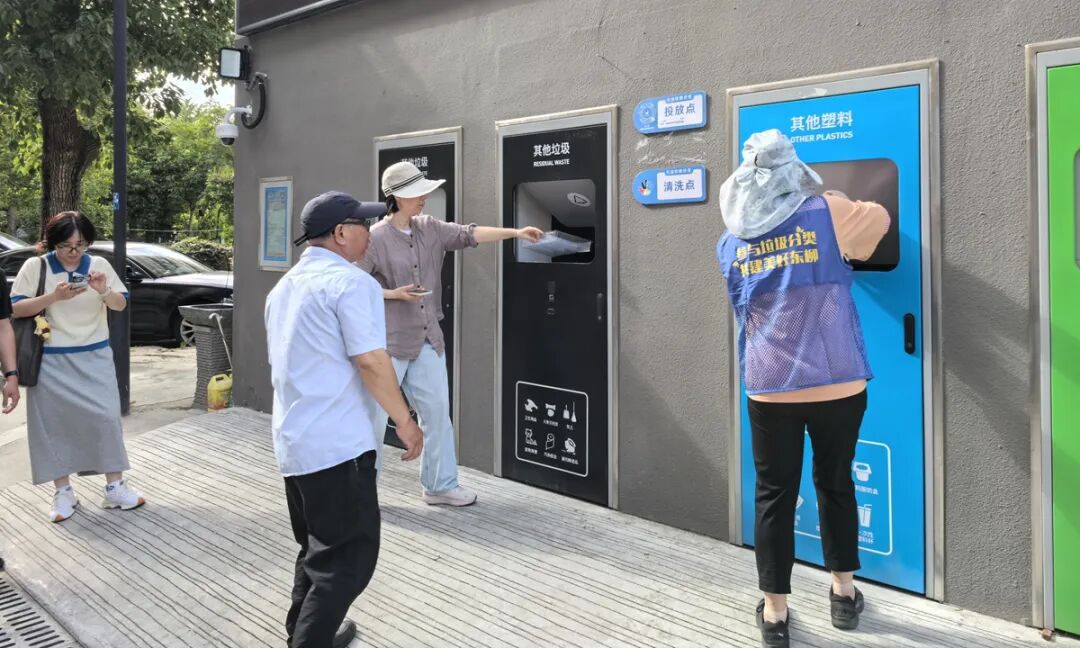
Residents sort waste at an intelligent recycling station in Ningbo. Photo: Zhang Yiyi/GT(宁波居民在智能回收站分类投放垃圾。图片来源:张依依)
At an intelligent recycling station in Ningbo's Xingfuyuan residential community, residents scan in, sort their recyclables and drop them into automatically opened bins, with the waste converted into reward points redeemable for cash.
Nearby, Zhao Zengbiao, deputy property manager of the Xingfuyuan community, occasionally helps remind residents how to sort their waste properly.
"Many residents used to see waste sorting as a hassle, but that's changing as we've continued raising awareness of the community," he told the Global Times. "The more carefully people sort, the more points they earn, so participation has become much more active."
As one of China's 46 key cities for waste sorting, Ningbo has since 2018 developed an integrated recycling system combining waste sorting and resource recovery through technologies including IoT, big data and AI. The city now has more than 4,000 smart recycling stations and over 1.88 million registered users.
But Ningbo's push into waste sorting began much earlier. Chen Shuai, head of the Business Supervision Section at the Ningbo Environmental Sanitation Guidance Center, told the Global Times the city began working with the World Bank on waste sorting projects as early as 2013.
"At that time, many Chinese cities had not yet adopted waste sorting, but Ningbo had already begun drawing on international experience," Chen said.
A second World Bank cooperation project was launched in 2023 to further explore recyclable resource recovery models in Ningbo, Chen added.
Today, many recycling bins can automatically signal when they are full, while the backend system dispatches collection vehicles and optimizes routes. The city's recyclable sorting accuracy now exceeds 90 percent.
Similar digital systems are being applied to other areas of city management, including bridges and urban lighting.

Dazzling neon lights and laser beams illuminate the city skyline in Ningbo. Photo: Courtesy of the Ningbo Municipal Facilities Center(绚烂的霓虹灯和激光束照亮宁波城市天际线。图片来源:宁波市市政设施中心)
At the Ningbo urban bridge monitoring center, real-time data on bridge vibrations, water levels and ship traffic flashes across large screens, while the backend system automatically analyzes anomalies and issues alerts.
"We are now effectively monitoring the 'heartbeat' and 'pulse' of the city's bridges in real time," Chen Bo, deputy secretary of the Ningbo Municipal Facilities Center, told the Global Times.
More than 2,500 urban bridges in Ningbo have been connected to the monitoring platform, including 38 key bridges under round-the-clock health monitoring. The system can also automatically identify and warn risks such as ship collisions and overloaded vehicles.
Meanwhile, Ningbo's urban lighting system is also becoming smarter. The backend platform automatically adjusts lighting time and brightness based on weather, traffic and pedestrian flow, helping reduce energy consumption. When faults occur, the system can quickly locate the problem and dispatch repair crews, significantly improving response efficiency.
Around 3.2 million lighting facilities across the city have now been connected to the smart management platform.
The same digital approach is also reshaping business services. In the past, companies often had to contact multiple government departments for business services. Now, many services can be handled online through Ningbo's integrated business service platform, where corporate requests are automatically matched with relevant policies and departments.
"Speed used to matter most. Now, companies care more about whether their problems can actually be solved," Xu Qi, deputy director of the business services division at the Ningbo Government Service Center, told the Global Times.
Xu said companies only need to enter basic information online for the system to match relevant policies and identify which requirements have been met and which still need to be fulfilled. Some regular matters can even be handled directly online, while more complex requests automatically transferred to relevant departments for processing within set time limits.
During a period of heightened uncertainty in external trade in 2025, the platform saw a surge in requests from foreign trade companies, Xu said. Ningbo launched a dedicated foreign trade service section and organized a series of offline events to help businesses access market and policy information and navigate challenges.
From intelligent recycling bins in residential communities to the constantly updating data at bridge monitoring centers and the steady flow of requests on business service platforms, many aspects of city management that once relied heavily on manual coordination are now running quietly in the background.
For many Ningbo residents, the changes may simply mean steadier street lighting, smoother traffic and fewer trips between government offices. But behind those daily routines, the city is steadily exploring new ways of "smart governance" as it works toward becoming a more efficient and responsive modern metropolis.
中文翻译
一座越来越“会思考”的城市
——宁波的智慧治理实践
记者 张依依报道
在宁波幸福苑小区的一处智能垃圾回收点前,居民输入手机号、选择垃圾类别后,对应回收箱随即自动打开。纸箱和塑料瓶投入后,系统自动完成称重,可回收物会转化为积分,再兑换成现金。
站在一旁的幸福苑小区物业副经理赵增表,不时提醒居民如何分类投放。
“以前很多人嫌麻烦,现在不一样了。”他对《环球时报》记者说,“分得越细,积分越高,大家慢慢就养成习惯了。”
作为全国46个垃圾分类重点城市之一,宁波自2018年起探索“垃圾分类+资源回收”两网融合模式,通过物联网、大数据和AI技术,将垃圾投放、运输、分拣和回收利用纳入统一管理体系。目前,全市已建成4000余个智能回收网点,注册用户超过188万户。
宁波的垃圾分类探索,实际上开始得更早。宁波市市容环境卫生指导中心业务督导科科长陈帅告诉《环球时报》记者,早在2013年,宁波便开始与世界银行合作推进垃圾分类项目。
“当时国内很多城市还没有垃圾分类的概念,但宁波已经开始尝试借鉴国际经验。”陈帅说。
此后,世界银行又于2023年启动第二期合作项目,希望宁波进一步探索可回收物资源化利用路径。如今,不少回收箱已经能够自动提示“满仓”状态,后台系统则会自动安排清运车辆并优化路线。目前,当地可回收物分类准确率已超过90%。
类似的数字化系统,如今也开始被应用到桥梁、照明等更多城市管理场景中。
在宁波市城市桥梁监测管理中心,大屏上的数据不断刷新,桥梁震动、水位变化和船只通航情况实时回传。后台系统会自动分析异常数据,并发出预警。
“我们现在相当于在实时感知桥梁的‘心跳’和‘脉搏’。”宁波市市政设施中心副书记陈波对《环球时报》记者表示。
目前,宁波已有2500余座城市桥梁接入智慧监测平台,其中38座重点桥梁实现全天候实时健康监测。针对船只撞桥、车辆超限等风险,系统还能自动识别并预警。
与此同时,宁波的城市照明系统也在不断升级。后台系统会根据天气、车流和人流变化,自动调整亮灯时间和照明亮度,大大节省了能源。照明设施发生故障后,平台还能自动定位并派单维修,应急反应速度也大大提高。
目前,全市已有约320万套照明设施接入智慧管控平台。
同样的数字化逻辑,也正在进入企业服务领域。
过去,企业办理事项往往需要跑多个部门。如今,在宁波企业综合服务平台上,不少事项已经可以在线完成,企业提交诉求后,系统也会自动匹配相关政策和对应部门。
“以前大家更强调‘办得快’,但现在企业更关心的是问题能不能真正解决。”宁波市政务服务中心企业服务处副处长徐琦对《环球时报》记者表示。
徐琦介绍,企业只需在线输入基本信息,系统便会自动匹配相关政策,并提示哪些条件已经符合、哪些仍需完善。建立涉企问题闭环解决机制,一些常见问题甚至可以直接在线完成办理。对于一些更复杂的诉求,平台则会自动流转至相关部门,并进行限时办理。
去年外部贸易环境波动加剧期间,平台后台一度出现大量外贸企业相关诉求,宁波很快上线外贸服务专区,并同步组织线下专题活动,为企业提供市场信息和政策,帮助度过难关,徐琦说。
从社区里的智能回收箱,到桥梁监测中心不断跳动的数据,再到企业服务平台后台持续更新的诉求信息,越来越多过去依赖人工协调的城市管理场景,如今正在“后台”悄然运转。
对于许多宁波市民而言,这些变化或许只是意味着路灯更加稳定、交通更加顺畅、办事少跑几趟窗口。但在这些日常细节背后,这座城市正不断探索“智慧治理”的新路径,朝着更加高效、更具响应力的现代化城市稳步迈进。
From immovable heritage to digital treasure
Tianyige Museum epitomizes Ningbo’s cultural creativity

Photo: Courtesy of Tianyige Museum(图片由天一阁博物院提供)
While the Ningbo Center rises high as an icon of modernity and grandeur in Ningbo, Tianyige, also known as the Tianyige Museum, is nestled quietly in the alleyways of the city's old town. It makes no claim to height. Instead, with quiet grace and unassuming elegance, it quietly chronicles Ningbo's cultural lineage, revealing the city's distinctive feature that history and modernity coexist in harmony.
First built during the Ming Dynasty (1368-1644), Tianyige stands as China's oldest surviving private library, home to some 300,000 volumes of ancient texts. In 1994, it became the Tianyige Museum. In the past, Fan Qin, a Ningbo native and Ming Dynasty senior official, together with his descendants, stored volume after volume of ancient books in the museum, placing them in bookcases made of locally sourced camphorwood. These books include Confucian and Taoist classics, local gazetteers, imperial examination records, and more.
Today, while these books still reside in those camphorwood cabinets, they have long surpassed their paper form, reaching the public through innovative displays and digital means.
Within the Tianyige Museum, its Zunjing Ge (Hall of Classics) has been turned into an exhibiting space. Every single month, it launches a show inspired by ancient books. Diving into the current May exhibition, one would be surprised to find that a Ming Dynasty printed edition records the famous Tang Dynasty (618-907) poet Wang Wei's poem "Xiang Si" (Yearning). In the widely known version, the last two lines of this poem are roughly translated as "May you gather plentifully, for this fruit best embodies remembrance." However, the treasured edition preserved in the museum records a strikingly different version: "Please do not gather them, for this fruit best embodies remembrance."
This intriguing detail reveals the historical and research value of these holdings. In order to make such rare resources more accessible to the public, the museum has been committed to the digital transformation of its ancient book collection. Its established digital platform is now globally accessible. As of May, more than 40,000 volumes of ancient books have been uploaded to this platform.
Moving beyond a simple "photograph-and-record" method, the museum has innovatively built a complete workflow that covers everything from "storage to revitalization." Relying on its self-developed big data governance platform for ancient books, the character recognition rate for ancient texts has reached approximately 95 percent.
Such an achievement would not have been easily attained without Ningbo's local "smart" culture - an interdisciplinary research environment that bridges the humanities and technology - along with its well-established urban digital infrastructure. For example, Ningbo's local facilities - including network bandwidth, cloud computing services, and 5G coverage - have provided an excellent platform for the storage and transmission of massive volumes of ancient book data.
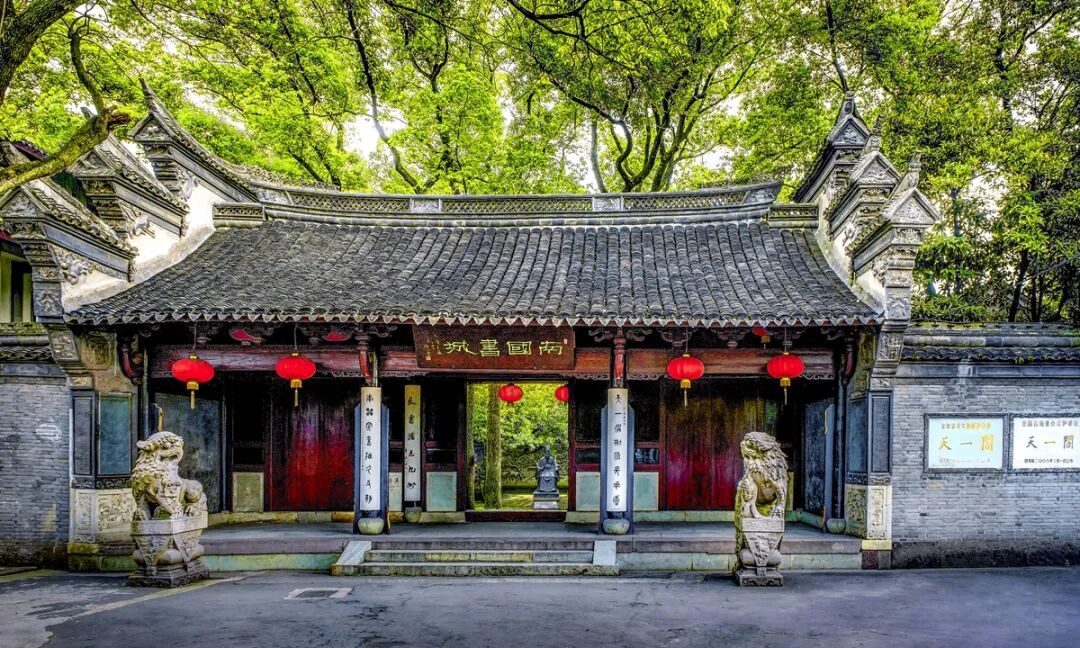
Photo: Courtesy of Tianyige Museum(图片由天一阁博物院提供)
Zheng Weiwei, vice-secretary of the museum Party Committee, told the Global Times that in addition to the digitization, the museum has also transformed ancient book resources into immersive experiences through methods such as "theatrical art performances" and "intangible cultural heritage handicrafts."
Yet, such a creative spirit for reading goes far beyond the museum's efforts alone.
Before the introduction of the national-level Regulations on Promoting Nationwide Reading, the city of Ningbo had already launched several local initiatives to promote reading across the population.
It introduced cultural brands such as "Reading Classics with Children" to cultivate reading habits among young people. "Reading Classics with Children" has also grown from a local initiative in Ningbo into a cultural brand that has received nationwide acclaim. In 2025, it was named one of the Top 10 National Reading Cases of the Year, setting an example for other brands on how to integrate resources and promote youth reading systems.
Utilizing Ningbo's local strengths in technological innovation, the city's first digital reading district inspired by the brand was established in 2026.
Through AR science interaction zones, mobile libraries, and other installations, the district enables children to experience the charm of traditional Chinese culture found in ancient classics by means of technology.
Currently, Ningbo is the first city in China to achieve full coverage of children's libraries at both the municipal and district (county) levels.
Including this, all 10 districts (counties, and county-level cities) in Ningbo have now completed and put into operation their children's libraries, fundamentally transforming the previous predicament of having to head to other districts to access library services.
As early as 2020, Ningbo had already implemented its own local regulations to promote reading in the city. These proposed a number of innovative measures, such as launching reading spaces in local food markets, recruiting volunteers to promote a reading atmosphere at the community level, as well as launching radio reading programs to serve people with disabilities.
These creative initiatives have broken the boundaries of reading, allowing Ningbo's time-honored culture of books and scholarship to continue to thrive till today.
中文翻译
从不可移动的文物到数字瑰宝:
天一阁博物院诠释宁波文化创造力
记者 李予澈报道
当宁波中心以现代与宏伟的姿态高耸入云,成为这座城市的标志性建筑时,天一阁博物院却静静安卧于老城的巷弄之间。它无意争高,而是以沉静的雅致与低调的优雅,默默记录着宁波的文化脉络,展现这座城市历史与现代和谐共存的独特气质。
天一阁始建于明朝(1368-1644),是中国现存最古老的私家藏书楼,藏有约30万卷古籍。1994年,它扩建为天一阁博物院。昔日,宁波人、明代高级官员范钦及其后人,将一卷卷古籍珍藏于此,并放入用本地樟木制成的书柜中。这些典籍包括儒道经典、地方志、科举录等。如今,虽然这些书籍仍安放于樟木书柜之中,但它们早已超越了纸张的形态,通过创新的展陈和数字化手段,走向了公众。
在天一阁博物院内,其尊经阁已被改造为一个展陈空间。每个月,这里都会推出一个以古籍为灵感来源的展览。若走进五月的展览,人们会惊奇地发现,一件明代刻本中记载了唐代(618-907)著名诗人王维的《相思》。在广为流传的版本中,这首诗的后两句大致译为"愿君多采撷,此物最相思"。而天一阁珍藏的刻本却记录了截然不同的版本:"劝君休采撷,此物最相思"。
这一有趣的细节揭示了这些馆藏的史学与研究价值。为了让公众更容易接触到这些珍稀资源,博物院一直致力于古籍的数字化工作。其建立的数字平台现已面向全球开放。截至今年五月,已有超过4万卷古籍上传至该平台。
博物院并不满足于简单的"拍照记录",而是创新性地构建了一套覆盖从"存藏到活化"全流程的完整工作体系。依托自主研发的古籍大数据治理平台,古籍文字的识别率已达到约95%。这一成就的取得,离不开宁波本地的"智慧"文化——一个人文与科技交叉融合的学科研究环境,以及宁波完善的城市数字基础设施。例如,宁波本地的网络带宽、云计算服务和5G覆盖等设施,为海量古籍数据的存储和传输提供了优质平台。
天一阁博物院党委副书记郑薇薇向《环球时报》表示,除了数字化之外,博物院还通过"戏剧艺术表演"和"非遗手工艺"等方式,将古籍资源转化为沉浸式体验。
然而,这种充满创意的阅读推广精神,远不止于博物院自身的努力。
在2025年国家层面的《全民阅读促进条例》出台之前,宁波市就已经推出了若干项促进全民阅读的地方性举措。宁波打造了"我陪孩子读经典"等文化品牌,以培养青少年的阅读习惯。"我陪孩子读经典"也已从宁波的一项地方性活动,发展成为获得全国赞誉的文化品牌。2025年,它被评为年度全国“十佳阅读活动案例”,为其他品牌在如何整合资源、促进青少年阅读体系建设方面树立了榜样。
利用宁波在技术创新方面的本地优势,受该品牌启发,宁波首个数字阅读街区于2026年建成。该阅读街区通过AR科技互动区、流动图书馆等设施,让孩子们能够借助科技手段,体验古代典籍中中华优秀传统文化的魅力。
目前,宁波10个区(县、市)的儿童图书馆均已建成并投入使用,从根本上改变了此前需要前往其他区域借阅的困境,是全国首个市、县两级少儿图书馆全覆盖的城市。此外,早在2020年,宁波就已实施了本市自己的全民阅读促进条例,提出了一系列创新举措,如在本地菜市场开设阅读空间、招募志愿者在社区层面营造阅读氛围,以及开设广播阅读节目服务残障人士。
这些富有创意的举措拓展了阅读的边界,让宁波崇书尚学的悠久文脉得以延续至今,生生不息。
编辑:朱立奇 卢泓瑜
来源:宁波发布
相关推荐